How Many FPS Do Our Eyes See?
Hello friends! Experiencing that amazing fluidity while playing games, achieving clarity in fast-paced movements, and being one step ahead of your opponent is everyone’s dream. This is where the question “how many FPS do our eyes see?” comes into play. Many people, while asking this question, are actually wondering: Does our eye work like a camera, or how many frames per second can our brain perceive?
How Many FPS Do Our Eyes See? The Working Principle of Our Eyes
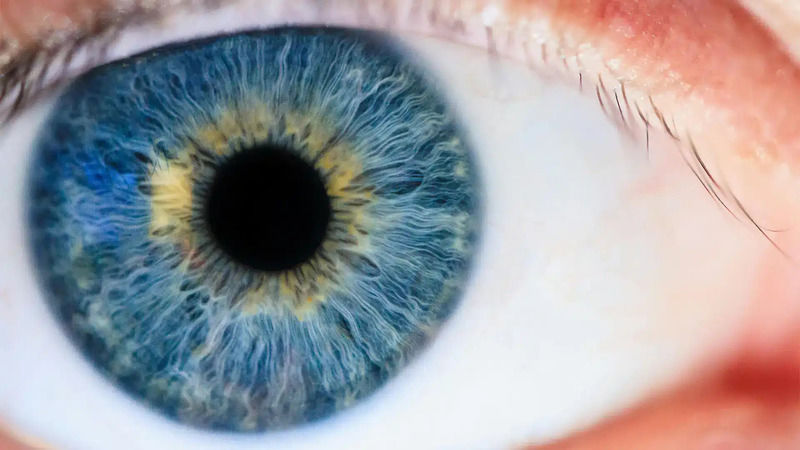
The human eye doesn’t take separate frames like a digital camera. Photoreceptor cells (cone and rod cells) on the retina constantly receive light signals and transmit these signals to the brain via the optic nerve. The brain then processes this continuous data, creating a smooth perception of the world.
When we scientifically address the question of how many FPS our eyes see, two fundamental concepts stand out:
- Critical Flicker Fusion Threshold (CFF): The frequency limit at which the flickering of the light source is perceived as “continuous light.”
- Temporal Resolution: How quickly we perceive visual changes, i.e., resolution related to time.
Classical research shows that under normal conditions, the CFF is on average between 50-90 Hz. This means that most people perceive flickers above 60 Hz as flicker-free. However, this limit varies greatly depending on light intensity, contrast level, stimulus type, and even viewing angle.
Classical Scientific Findings: 50-90 Hz Range
Most fundamental studies show that the human eye’s perception of flicker reaches saturation around 50-65 Hz. Cone cells, responsible for daytime vision, are effective up to approximately 60 Hz in high light, while rod cells, which operate in low light, respond much more slowly (~15 Hz).
These values form the basis of international screen ergonomics standards. The long-held myth that “the human eye cannot see beyond 60 FPS” originated from this. However, modern research shows that this limit is significantly exceeded.

Current Research: Is Perception at 500 Hz and Above Possible?
A significant study published in 2015 (Nature Scientific Reports) changed the picture. Researchers showed that in stimuli containing high-frequency spatial edges, people can perceive flicker artifacts even above 500 Hz. The median value was around 500 Hz, and some subjects showed sensitivity up to 800 Hz. This proved that the classic 50-90 Hz limit only applies to smooth, homogeneous light. When it comes to complex visual stimuli with sharp edges, our eyes can perceive much higher frequencies.
Another noteworthy study is a 2014 MIT study. The brain can recognize even an image lasting only 13 milliseconds (approximately equivalent to 77 FPS). Participants were able to correctly identify complex scenes such as “picnic” or “smiling couple” even in ultra-short periods. This shows that visual information is processed very quickly.
Fighter Pilots and Special Skills
In earlier experiments with the US Air Force, it was reported that experienced fighter pilots could accurately identify aircraft silhouettes lasting only 1/220th of a second (approximately equivalent to 220 FPS). This finding reveals the eye’s potential in simple motion detection and high-contrast stimuli. Although these tests weren’t monitor-related, they are invaluable in understanding the speed limits of our visual system.
Individual Differences: Do Everyone See the Same?
The most important answer to the question of how many FPS our eyes see is hidden here: The answer varies greatly from person to person!
A 2024 study at Trinity College Dublin revealed significant variation among participants. Some people no longer detected flicker at 35 Hz, while others could clearly perceive flicker even above 60 Hz. Temporal resolution creates a different “personal umwelt” in each individual. Age, fatigue level, light conditions, stimulus size, and even genetic factors influence this difference.
Some people are naturally “fast-seeing,” while others have slower temporal resolution. These individual differences may not be very noticeable in daily life, but they can become apparent in activities involving fast movement (such as sports or competitive gaming environments).

Perception of Fast Motion and the Role of the Brain
In daily life, even slow movements can appear fluid at around 18-30 FPS. However, when rapid changes occur, the brain demands more temporal information. Our eyes don’t “count frames”; thanks to persistence of vision, the brain fills in the gaps and creates a continuous flow.
Scientific data summarizes the situation as follows:
- Basic flicker perception: 50-90 Hz
- In complex scenes and high contrast: 200-500 Hz and above
- Ultra-short image recognition: 13 ms (~77 FPS)
- In specially trained individuals: 220 FPS equivalent
These figures show that our eyes have long surpassed the classic “60 FPS is enough” limit. Our visual system is an extremely dynamic structure that has evolved according to the need for survival and rapid reaction.
No Clear Number, Just a Constant Potential
There is no single, clear scientific answer to the question of how many FPS our eyes see. Because our eyes are not a camera; A system that constantly receives signals, where the brain processes information at an incredible speed. While average values start around 50-90 Hz, under special conditions and with individual differences, this limit can reach up to 500 Hz.
Science teaches us this: Human visual perception is flexible, powerful, and unique to each individual. Some of us perceive the world “faster,” while others perceive it at a slightly slower pace. These differences make us interesting.
Read More: Metro 2039 is Becoming a Reality