
How Retailers Monetize Space with Sweepstakes
If you run a small retail store, every square foot matters. Rent isn’t cheap, and unused space is basically lost money. That’s why more owners are looking at options like cyber cafe software to turn idle areas into revenue.
It’s not about changing your whole business. It’s about adding a layer that works alongside what you already do—and pays for itself.
Why Floor Space Is a Hidden Opportunity
Most small retailers don’t think of their space as a product. But it is.
A few underused corners, a couple of empty tables, or even space near the entrance can be repurposed. Instead of just displaying products, that area can generate direct, repeatable income.
Here’s the simple math:
- Traditional retail = one-time purchase
- Sweepstakes gaming = repeat visits + longer sessions
That difference changes how your space performs over time.
What Sweepstakes Games Actually Add
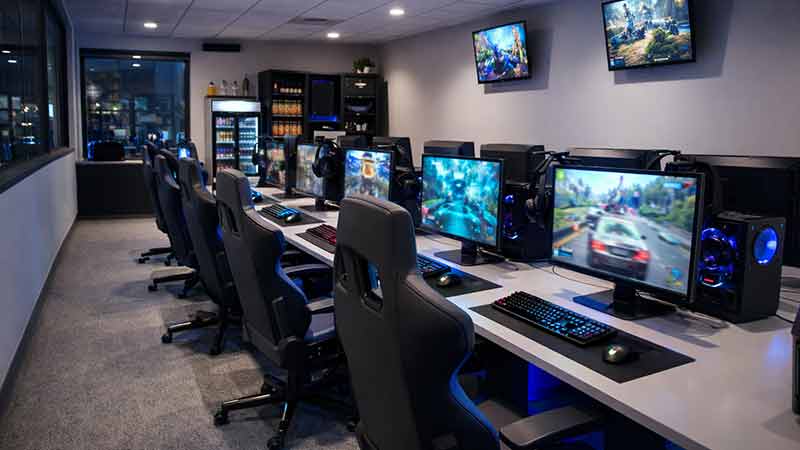
Sweepstakes setups are usually compact. A few terminals, basic seating, and a system to manage gameplay.
But what they bring is more important:
- Longer customer visits
People stay longer when they’re engaged. That increases the chance they buy something else—drinks, snacks, or products. - Repeat traffic
Players come back. Not once a month—sometimes multiple times a week. - Predictable revenue
Unlike retail sales, which fluctuate, gaming activity tends to stabilize after the first few months.
You’re not replacing your store. You’re giving people another reason to walk in.
Where It Fits in Real Stores
This isn’t theory. You can see it in different types of locations:
Convenience stores
They use sweepstakes terminals near the back. Customers grab a drink, then sit down to play.
Smoke shops
Already have regular traffic. Adding games increases time spent in-store.
Small cafés
A few gaming stations can double as a second revenue stream during slow hours.
In each case, the setup is simple. The key is placement—visible, but not intrusive.
The Role of Software (and Why It Matters)
This only works if the system behind it is solid.
You need something that handles:
- User sessions
- Credit tracking
- Game access
- Reporting
That’s where a proper cyber cafe system comes in. Not just for control, but for automation.
Without it, you’re basically trying to manage a mini gaming operation manually. That doesn’t scale and usually leads to mistakes.
With the right setup:
- Staff don’t need special training
- Transactions are tracked automatically
- You can see performance in real time
It turns what could be messy into something structured.
Costs vs. Return
This is the part most owners care about.
Initial setup isn’t zero, but it’s not huge either:
- Hardware (PCs or terminals)
- Software subscription
- Basic furniture
What matters is how fast it pays back.
In many cases:
- Locations recover setup costs within a few months
- After that, it becomes a steady revenue stream
The biggest factor isn’t the cost—it’s execution. Poor placement or bad setup slows everything down.
What Makes It Work (and What Doesn’t)
Not every location succeeds. The difference usually comes down to a few things.
What works:
- Clear, simple setup
- Comfortable seating
- Easy onboarding for new players
- Consistent uptime (no technical issues)
What doesn’t:
- Hiding the setup where no one sees it
- Overcomplicating the process
- Using unreliable systems
- Treating it like a side experiment instead of a real offering
If customers don’t understand it in 30 seconds, they won’t engage.
A Practical Way to Start
You don’t need to go all in from day one.
A simple approach:
- Start with 2–4 stations
- Place them where people naturally pause
- Use software that handles everything in the background
- Watch how customers react
- Scale based on actual usage
This keeps risk low and gives you real data before expanding.
Summary
Retail margins are tight. Space is expensive. And foot traffic isn’t always predictable.
Sweepstakes gaming gives small retailers a way to fix all three—without changing their core business.
It works because it adds something your store probably doesn’t have: engagement that keeps people coming back.
Done right, a few square meters can turn into one of the most consistent parts of your revenue.
Read More: