The ASUS ROG Astral RTX 5090 Edition 20 has an Insane Price
While graphics card prices have long been a source of frustration for gamers and system builders, ASUS’s new premium model has taken things to a whole new level. The ASUS ROG Astral RTX 5090 Edition 20 has attracted attention with its listing at a European retailer. This special edition is being talked about not only for its performance but also for its price tag, which alone surpasses the price of almost an entire high-end system.
ASUS ROG Astral RTX 5090 Edition 20 Price Breaks Record
ASUS’s special graphics card, prepared for the 20th anniversary of its ROG brand, is listed at €6,499 at the European-based LDLC store. This figure is approximately $7,435 according to the current exchange rate. Thus, the ASUS ROG Astral RTX 5090 Edition 20 has become one of the most expensive RTX 5090 models seen on the market.
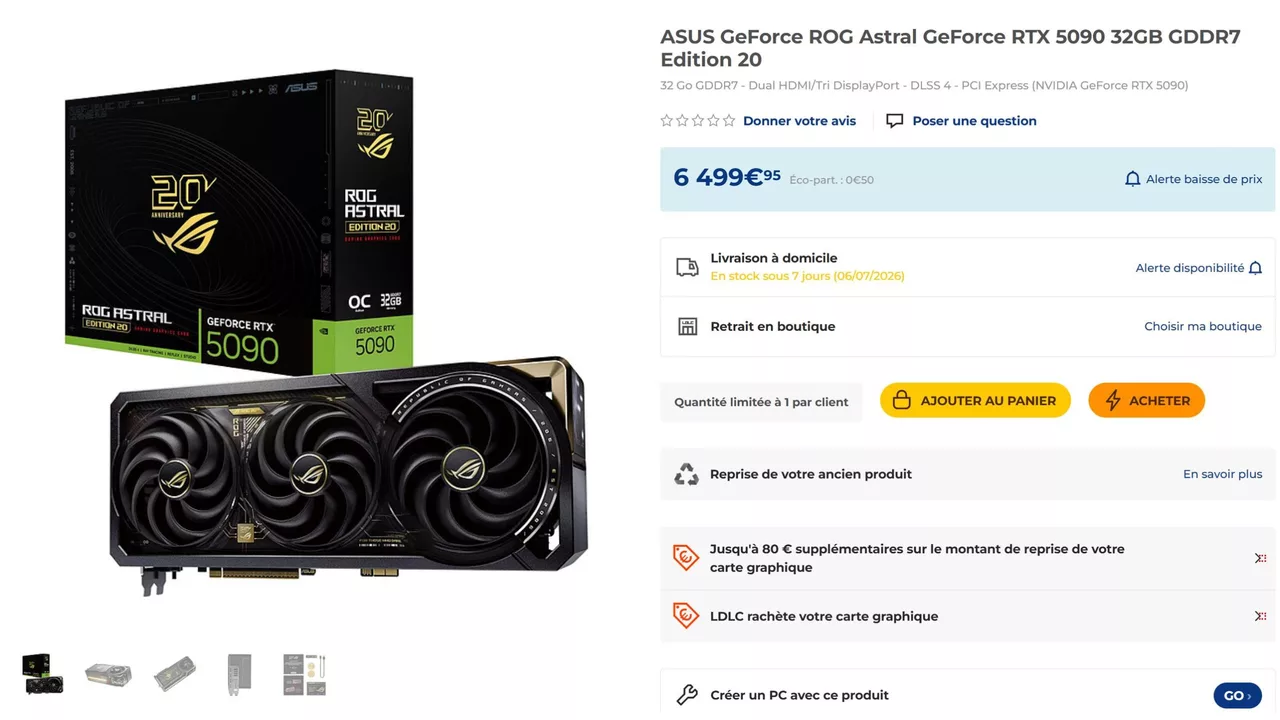
It’s clear that the card is a technically high-end model. This special edition, with 32GB of GDDR7 memory, carries the premium design language of the ROG Astral series. However, the debate here revolves more around the price than the performance. RTX 5090 models are already sold at very high prices in many markets, and the price tag of this special edition takes things to an extreme.
ASUS previously drew attention with its high price for the ROG Matrix RTX 5090 model. However, the Edition 20 listing makes even the Matrix series seem expensive. It’s unclear from the source whether this is the official global price. Nevertheless, the card is expected to be positioned much more expensive than standard models in markets like North America.
The cost pressure on the memory and GPU side is cited as a factor in this price increase. Despite this, the picture isn’t very encouraging for gamers. Because while similar RTX 5090 models can be found at lower prices, ASUS’s special edition stands out more for its collectible value, brand prestige, and limited production appeal. In short, this card appeals to those who demand “top-of-the-line ROG product” as much as they want performance.
Read More: Sony Banned Disks, Is the Next Target Disk Drive?